If you experience difficulty with the video you can Watch on YouTube
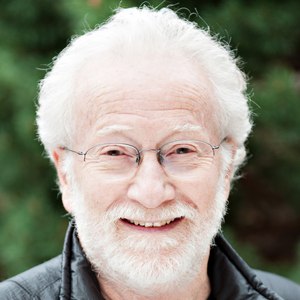
Dr. Larry Gold is the Founder of SomaLogic. Prior to SomaLogic, he also founded and was the Chairman of NeXagen, Inc., which later became NeXstar Pharmaceuticals, Inc. In 1999, NeXstar merged with Gilead Sciences, Inc. to form a global organization committed to the discovery, development and commercialization of novel products that treat infectious diseases.
During his nearly 10 years at NeXstar, Dr. Gold held numerous executive positions including Chairman of the Board, Executive Vice President of R&D, and Chief Science Officer. Before forming NeXagen, he also co-founded and served as Co-Director of Research at Synergen, Inc., a biotechnology company later acquired by Amgen, Inc. Dr. Gold recently became the CEO of Lab79, a new biotech company in Boulder, Colorado.
Since 1970, Dr. Gold has been a professor at the University of Colorado at Boulder. While at the University, he served as the Chairman of the Molecular, Cellular and Developmental Biology Department from 1988 to 1992. Between 1995 and 2013, Dr. Gold received the CU Distinguished Lectureship Award, the National Institutes of Health Merit Award, the Career Development Award, the Lifetime Achievement Award from the Colorado Biosciences Association, and the Chiron Prize for Biotechnology. Dr. Gold was also awarded the 8th International Steven Hoogendijk Prize by the Dutch Batavian Society of Experimental Philosophy in 2018.
In addition, Dr. Gold has been a member of the American Academy of Arts and Sciences since 1993 and the National Academy of Sciences since 1995. He is a fellow of the National Academy of Inventors. Dr. Gold also serves on the Board of Directors for CompleGen, Plato BioPharma, Lab79, Keck Graduate Institute, and the Biological Sciences Curriculum Study.
Dr. Gold established the Gold Lab at the University of Colorado Boulder in 1971. Starting with basic research on bacteria and bacteriophage, the lab shifted its focus to human disease following the invention of the SELEX process in 1989. The Gold Lab today focuses on the utilization of biological and information technology to improve healthcare. Dr. Gold also began holding the GoldLab Symposia in 2010, an annual event that tackles big questions in healthcare. He is determined to change healthcare for the better through teaching, research, and debate among scientists and citizens throughout the world.
Abstract
Abstract coming soon!
Abstract
 I will tell the story of how three pioneers of molecular biology made breathtaking insights into the nature of the genetic material based on simple experiments with a bacterial virus (phage) called T4. Using T4, Seymour Benzer brought the genetic material down to the level of nucleotides and defined the gene as a functional unit (cistron). Building on the work of Benzer, Francis Crick, Sydney Brenner and their collaborators deduced that the genetic code is read in units of three bases, is non-overlapping and is read from a fixed starting point. These remarkable insights were made using two genes of phage T4 called rIIA and rIIB and simple experiments based on whether or not the mutants could form zones of clearing (plaques) on a lawn of bacteria growing on an agar plate. Fast forward a quarter of a century with the invention of DNA sequencing, our host Larry Gold and his research team revisited these classic experiments by sequencing the rIIA and rIIB mutants. Seen from the lens of these nucleotide sequences, Crick and Brenner were correct in their conclusions but not for the reasons that are widely believed.
 Biography
Richard Losick is Professor emeritus at Harvard University. He previously held the positions of Maria Moors Cabot Professor, Harvard College Professor and Howard Hughes Medical Institute Professor. He received his A.B. in Chemistry at Princeton University and his Ph.D. from MIT. He was a Junior Fellow of the Harvard Society of Fellows. He is a past Chairman of the Department of Cellular and Developmental Biology and the Department of Molecular and Cellular Biology. He is a member of the National Academy of Sciences, a Fellow of the American Academy of Arts and Sciences, a Member of the American Philosophical Society, a Fellow of the American Association for the Advancement of Science, and a Fellow of the American Academy of Microbiology. He is a recipient of the Camille and Henry Dreyfus Teacher-Scholar Award, the Selman A. Waksman Award of the National Academy of Sciences, the Canada International Gairdner Award, and the Louisa Gross Horwitz Prize for Biology or Biochemistry of Columbia University. Having taught introductory molecular biology for over 50 years, Losick now teaches a course on the History of Molecular Biology.
Abstract
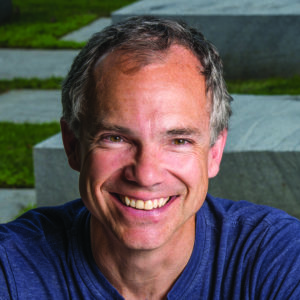 Key pieces of our understanding of how DNA encodes genes were established in the 1950's and 1960's using elegant genetic experiments on two genes called rIIA and rIIB in bacterial virus T4. The abstract and powerful logic of these experiments never required knowing what these genes actually do, and the molecular functions of rIIA and rIIB have remained unknown to this day. In my talk, I will revisit the mystery of the rII genes to tell a story of 70 years of progress in biology, computational genomics, and artificial intelligence.
Biography
Sean Eddy is a computational biologist at Harvard University. Before moving to Harvard in 2015, he was a group leader at the Howard Hughes Medical Institute’s Janelia Research Campus, and before that, a faculty member in the Genetics department at Washington University in St. Louis. He received a bachelor’s degree from Caltech, a Ph.D. from the University of Colorado at Boulder, and did postdoctoral work at NeXagen in Boulder and at the MRC Laboratory of Molecular Biology in Cambridge, UK.
Abstract
Abstract coming soon!
Abstract
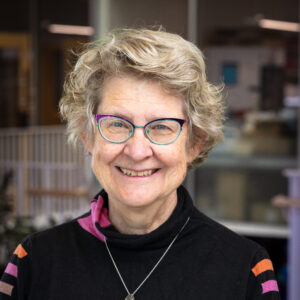 Cilia are complex macromolecular machines that are built using long polymers of α-and β-tubulin and come in two forms, motile and non-motile. Motile cilia provide movement for unicellular organisms, and in multi-cellular organisms move surrounding fluids as well as receive and transmit signals from and to the environment and adjacent cells. It is an organelle that is only 250nm by 5000 nm and contain over 1000 different proteins, which means that 5% of the human genome is needed to build a motile cilium. The membrane surrounding the less complex non-motile cilia, which are present on most mammalian cells, contains a variety of receptors and ion channels. Patients with defects in motile cilia exhibit newborn respiratory distress, chronic respiratory infections, and male infertility. About one-half of these patients have their heart, stomach, and spleen on the right instead of the left side of their chest. Defects in non-motile cilia can cause obesity, retinal degeneration, kidney dysfunction, anosmia, and autism.
Biography
Dr. Susan Dutcher is a Professor of Genetics at Washington University School of Medicine in St. Louis, where her pioneering research focuses on the genetics and functional mechanics of cilia. By bridging the gap between a single-celled green alga and human tissues, her laboratory has identified dozens of genes to understand ciliary architecture and complex interactions that provide critical insights into human lung disease and potential therapeutic pathways.
Dr. Dutcher’s multidisciplinary approach integrates genomics, mass spectrometry-based proteomics, and advanced imaging—ranging from high-resolution light microscopy to single-particle cryo-electron microscopy. Her work even extends into mechanical engineering to quantify biological forces in cilia.
A seasoned leader in the scientific community, Dr. Dutcher has served as Chair of the Department of Genetics at WashU and Director of the McDonnell Genome Institute (MGI). During her tenure at MGI, she contributed to landmark initiatives including the Center for Common Disease Genomics for heart disease, the Primate Genome Project, and the inception of the Pan-Genome Project.
Dr. Dutcher earned her B.A. at Colorado College, her Ph.D. at the University of Washington under Nobel Laureate Dr. Lee Hartwell, and was a postdoctoral fellowship at Rockefeller University. After beginning her faculty career in MCDB at the University of Colorado in 1983, she joined Washington University in 1999. Her contributions to science have been recognized with election to the National Academy of Sciences, as well as fellowships in the American Academy of Arts and Sciences, the AAAS, and the American Society for Cell Biology.
Abstract
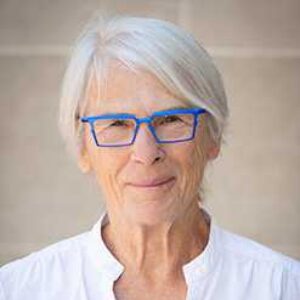 About 100 years ago Paul Erlich used the term Horror Autoxicus to describe the idea that the immune system could attack, via antibodies, foreign materials, but not the content of its host. Although there was evidence that the idea was incorrect, the notion of autoimmunity didn’t reach full strength until about the 1950s, with experiments showing that animals, including humans, could produce antibodies against their own tissues. The internet tells us that about 150 such diseases have so far been named. Many genetic variants have been linked to these diseases, most powerfully, alleles of major histocompatibility complex (MHC) proteins. Because we now understand that MHC proteins are involved in T cell biology, notions about autoimmunity include both T and B cell activity. Also, it is now known that the immune system has several ways of preventing autoimmunity, via death of autoreactive T cells in the thymus, modification of autoreactive B cells in the bone marrow, inhibition of activity of autoreactive lymphocytes, and, as recognized by one of this year’s Nobel Prizes, the activity of regulatory T cells. Lots of questions remain unanswered. Why is it that only some people become autoimmune? What precisely do autoimmune lymphocytes recognize in their host? Can antigen specific treatments be used to lower the symptoms of or completely prevent autoimmunity? Why are women more likely to become autoimmune than men? Some of these questions will be discussed.
Biography
I was raised in the United Kingdom and Malta GC. After boarding school I went to New Hall college Cambridge University and there took a degree in Biochemistry. I got my Ph.D. with Dr. Alan Munro at the Molecular Biology Laboratories, 4 miles south of the City of Cambridge. In 1969 I married Tony Hunter and, in 1971, we came together to the University of California, San Diego (me) and the Salk Institute (Hunter). In 1973 I got divorced and moved to the University of Rochester with John Kappler, whom I later married. I had two children and simultaneously moved up the academic ranks to the status of Associate Professor, running a lab then and until recently with my husband. In 1979 John Kappler and I moved to what are now called National Jewish Health and the University of Colorado where I continued to move up the ranks ending up as a Distinguished Professor and Chair of the Department of Immunology and Genomic Medicine at National Jewish Health. Now I am more or less retired. With my husband I have been awarded a number of prizes including the Royal Society Wellcome Foundation Prize, the Louisa Gross Horwitz Prize, the Paul Ehrlich and Ludwig Darmstadter Prize, the L’Oreal Unesco prize for Women and the Wolf Prize. I have been elected to the membership of the National Academy of Sciences, the National Academy of Medicine, the Royal Society, the Society for Medical Sciences (UK) and the American Academy of Arts and Sciences. I have trained more than 10 Ph.D. students and more than 40 postdoctoral fellows. Almost all of these now hold positions as scientists in academic or biotechnological institutions. I feel myself to have been extraordinarily lucky to have had supportive colleagues and a wonderful life.
Abstract
Abstract coming soon!
Abstract
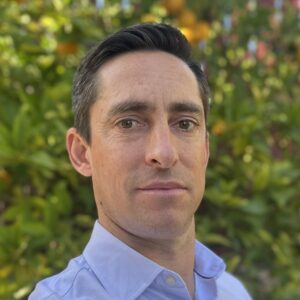 Illumina’s mission to unlock the power of the human genome has led to the development of genome sequencers that have transformed clinical diagnostics and biomedical research. Illumina is building on that vision by extending the use of their sequencing instruments beyond traditional genomics with a portfolio of multiomics products spanning epigenetics, transcriptomics, and proteomics. These end-to-end multiomics products will enable researchers and clinicians to integrate diverse biological data streams, offering unprecedented insights into disease mechanisms and paving the way for more precise diagnostics and targeted therapeutic strategies.
Biography
Mike Mehan leads the Multiomics Bioinformatics group at Illumina, driving innovations in epigenomics, transcriptomics, and proteomics. Illumina is a global leader in next-generation sequencing and enables researchers and clinicians to gain deeper insights from genomics data. Mike contributes to Illumina’s mission of transforming human health by working with his team to develop algorithms and software for Illumina’s portfolio of multiomics products. This new multiomics direction in sequencing combines diverse biological data to deliver a complete view of complex systems, unlocking new potential in disease diagnosis, customized therapies, and personalized medicine.
Abstract
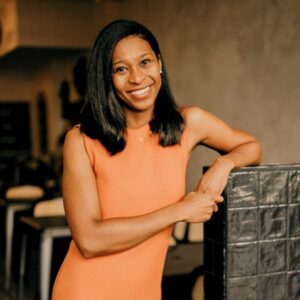 The East Coast Seedkeepers, made up of members of the Nanticoke and Lumbee communities, will discuss how they are exercising their sovereignty, revitalizing Indigenous peoples' relationships with plant ancestors, and strengthening community food systems. The team envisions a regenerative food system where ancestral seeds support environmental resilience, strengthen local economies, and empower Indigenous people and communities. Their interdisciplinary work encompasses horticulture, oral history, archival research, community conversations, and genetic analysis.
 Biography
Courtney Streett (Nanticoke Indian Tribe) co-founded Native Roots Farm Foundation (NRFF) and uses her knowledge of Indigenous communities, horticulture, and visual storytelling to lead the organization. Prior to NRFF, Streett was a television news producer at CBS News and Business Insider. She received an MS from Columbia University’s Graduate School of Journalism and wrote her thesis on the local food movement. She earned a BA in Environmental Studies and a BA in Africana Studies from Wellesley College. She focused her undergraduate studies on environmental justice and conducted research in Wellesley’s greenhouses on plant responses to organic and conventional growing methods.
Streett is part of the East Coast Seedkeepers. The team is led by members of the Nanticoke and Lumbee communities who are braiding together methodologies including oral history, archival research, community conversations and involvement, and genetic analysis to reclaim and recultivate human/plant relationships with ancestral seeds — particularly The Three Sisters (Corn, Beans, and Squash). The East Coast Seedkeepers received an MIT Solve Indigenous Fellowship in September 2025.
Abstract
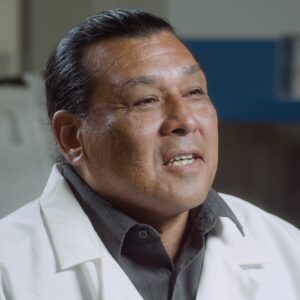 NativeBio is a global leader in creating safe data sharing tools for our multipolar future. The jostling for position in an ever competitive data and artificial intelligence market has the potential to become culturally, economically and physically violent. In this competition and race to elucidate or make practical new resources, Indigenous spaces and knowledge are now and long been low hanging fruit for tech startups. Very few, if any, systems protect or regulate data from powerless or impoverished populations. The United Nations has made some attempts but it's long been compromised by Western thinking. Therefore, Indigenous Knowledge and/or data, once collected is used in any way the UN and its members choose to use it and interpret it without any Indigenous involvement. The principles of an Ethical Protocol for the Protection and Use of Traditional Indigenous Knowledge include Ownership by the Peoples it comes from; Control over how it is used; Accessibility by those who shared it; and a recognition that it belongs to the Peoples who shared it as delineated in the CARE principles. This talk will demonstrate how CARE, Federated Data sharing and other mechanisms can make things equitable for underprivileged populations but also an increasingly competitive and violent world.
Biography
Joseph M. Yracheta is an Amerindigenous Scientist (P’urhepecha y Raramuri from Mexico) at the Native BioData Consortium, the first non-profit sample and data “safe-harbor” storage facility, which exists within the Cheyenne River Lakota Nation (Sioux) of South Dakota. Mr. Yracheta has been a scientist since 1990 where he started as a bench biotechnician and worked across many biomedical disciplines. In 2014 he graduated from the UW-Seattle with a master’s of Pharmaceutics and Bioethics under Drs. Ken Thummel and Wylie Burke. He is currently finishing a Dr.P.H. in Environmental Health and Engineering from Johns-Hopkins under Drs. Ana Navas-Acien and Paul Locke. Mr. Yracheta is passionately working to achieve Indigenous Data Sovereignty by performing all the roles necessary, such as:
With over 60 scientific and humanities publications, 100s of speaking engagements, and multiple worldwide indigenous partnerships, Mr. Yracheta believes that ALL data and resources must be seen as unforeseen futures, where their value and governance must and will constantly change. He feels this data must be secured for Indigenous economic and cultural sustainability. This extension of Indigenous primacy and revitalization of sovereignty is the epitome and manifestation of “survivance” that Dr. Gerald Vizenor, Anishinaabe writer and critical semiotics theorist, envisioned for Indigenous resiliency and futures (https://books.google.com/books/about/Manifest_Manners.html?id=ey7-xcwvHbQC).
Abstract
Abstract coming soon!
Abstract
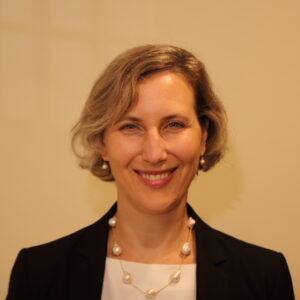 Artificial intelligence is reshaping the biomedical and health ecosystem, from drug discovery and translational research to public health analytics and clinical care delivery. Its expanding role across healthcare and the life sciences brings a juxtaposition of transformative potential and societal risk that remain closely intertwined. In this talk, I will explore case studies that highlight radical breakthroughs and emerging risks to examine how we might maximize the benefits of AI while mitigating the potential for harm – thereby unlocking a future in which AI consistently improves health.
Biography
With a career spanning federal science policy, health technology, and national security, Jennifer Roberts brings a combination of technical depth and strategic vision to some of the most pressing challenges in public health and artificial intelligence. Jennifer served as Chief Data Officer and founding Director of the Resilient Systems Office at ARPA-H, the Advanced Research Projects Agency for Health. In those roles, she shaped the agency’s system innovation strategy from the ground up and led efforts to build health platforms capable of withstanding large-scale disruptions — from biological threats to software failures — through resilience by design.
Prior to ARPA-H, Dr. Roberts served as the Assistant Director of Health Technologies at the Office of Science and Technology Policy at the White House and on the leadership team of the Defense Advanced Research Projects Agency (DARPA) as the Deputy Director of the Information Innovation Office. For her contributions, Dr. Roberts received the DARPA Superior Public Service Medal. Dr. Roberts holds a Ph.D. in Computer Science from MIT, where she was a Hertz Fellow and National Science Foundation Fellow.
Abstract
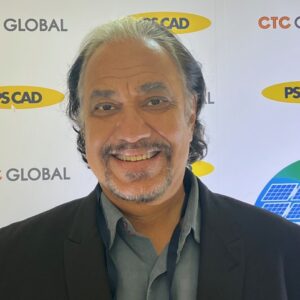 The realities of how Asian and certain EU countries are addressing the energy trilemma of climate change/adaptation, energy security and economic growth/affordability may not only prove to be resilient, but also may be permanently reshaping geopolitics. War driven volatility has accelerated energy security driven adoption of the energy transition, often in unexpected ways that runs counter to the conventional narrative. We will also explore alternative strategies to powering the AI revolution, and more broadly electrification of heat and mobility. The implications to technology, democracy, and the U.S.'s current path are profound.
Biography
Kyle Datta is Executive Director, Pacific Region for the Energy & Infrastructure team at Teneo. Kyle advises senior executives on navigating the trilemma challenges of balancing energy security, affordability and the clean energy transition. Kyle’s long and distinguished career in the energy sector includes Managing Partner of Booz Allen & Hamilton’s Asia Energy Practice and U.S. Utilities Practice, Principal at Roland Berger, Managing Director of Rocky Mountain Institute, CEO of U.S. Biodiesel Group, and founder and General Partner of the Pierre Omidyar’s Ulupono Initiative investment firm.