If you experience difficulty with the video you can Watch on YouTube
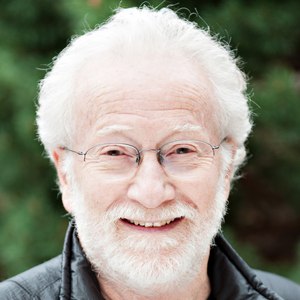
Dr. Larry Gold is the Founder of SomaLogic. Prior to SomaLogic, he also founded and was the Chairman of NeXagen, Inc., which later became NeXstar Pharmaceuticals, Inc. In 1999, NeXstar merged with Gilead Sciences, Inc. to form a global organization committed to the discovery, development and commercialization of novel products that treat infectious diseases.
During his nearly 10 years at NeXstar, Dr. Gold held numerous executive positions including Chairman of the Board, Executive Vice President of R&D, and Chief Science Officer. Before forming NeXagen, he also co-founded and served as Co-Director of Research at Synergen, Inc., a biotechnology company later acquired by Amgen, Inc. Dr. Gold recently became the CEO of Lab79, a new biotech company in Boulder, Colorado.
Since 1970, Dr. Gold has been a professor at the University of Colorado at Boulder. While at the University, he served as the Chairman of the Molecular, Cellular and Developmental Biology Department from 1988 to 1992. Between 1995 and 2013, Dr. Gold received the CU Distinguished Lectureship Award, the National Institutes of Health Merit Award, the Career Development Award, the Lifetime Achievement Award from the Colorado Biosciences Association, and the Chiron Prize for Biotechnology. Dr. Gold was also awarded the 8th International Steven Hoogendijk Prize by the Dutch Batavian Society of Experimental Philosophy in 2018.
In addition, Dr. Gold has been a member of the American Academy of Arts and Sciences since 1993 and the National Academy of Sciences since 1995. He is a fellow of the National Academy of Inventors. Dr. Gold also serves on the Board of Directors for CompleGen, Plato BioPharma, Lab79, Keck Graduate Institute, and the Biological Sciences Curriculum Study.
Dr. Gold established the Gold Lab at the University of Colorado Boulder in 1971. Starting with basic research on bacteria and bacteriophage, the lab shifted its focus to human disease following the invention of the SELEX process in 1989. The Gold Lab today focuses on the utilization of biological and information technology to improve healthcare. Dr. Gold also began holding the GoldLab Symposia in 2010, an annual event that tackles big questions in healthcare. He is determined to change healthcare for the better through teaching, research, and debate among scientists and citizens throughout the world.
Abstract
Abstract coming soon!
Abstract
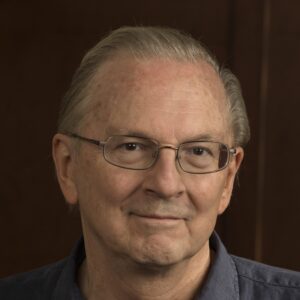 An organism’s genome encodes information about how to live in the world. This means information about the internal world, the organism itself, its structure, metabolism and its replication, but also information about the external world, how to sense and respond to it. The information that is coded in the genome is learned over evolutionary time as replication errors result in a random walk through sequence space, ruthlessly trimmed by natural selection. But how do you get a genome in the first place? How do you go from nothing to even a rudimentary genome? How might that primordial genome replicate before it had learned to encode any replication machinery? What barriers had to be overcome before the genome could begin to accumulate information, to learn and encode all of biochemistry? These are some of the issues that I will discuss.
Biography
Dr. Szostak is a University Professor and Professor of Chemistry at the University of Chicago, and an Investigator of the Howard Hughes Medical Institute. Dr. Szostak’s early research on telomere structure and function and the role of telomere maintenance in preventing cellular senescence was recognized by the 2006 Albert Lasker Basic Medical Research Award and the 2009 Nobel Prize in Physiology or Medicine. In the 1990s Dr. Szostak and his colleagues developed in vitro selection as a tool for the isolation of functional RNA, DNA and protein molecules from large pools of random sequences. Dr. Szostak’s current research interests are in the laboratory synthesis of self-replicating systems and the origins of life.
Abstract
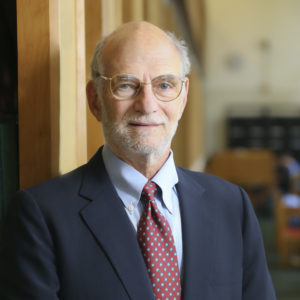 The last 40 years has seen a sea change in the field of circadian rhythms. This 24- hour timing system (circadian = circa dia = about a day) has gone from a mystical, barely credible phenomenon to a real scientific enterprise. The contemporary molecular era was preceded by a foundational genetic study in Drosophila (fruit flies) published in 1971 by Konopka and Benzer; this organism has been a pioneering genetic system for more than 100 years. My colleagues and I then discovered in the 80s and 90s the mechanism that underlies circadian timing in flies, and it turned out that these genes and mechanisms are conserved in all animals. To our surprise, this circadian system governs a large fraction of all gene expression, once again extending from fruit flies to humans, which explains why so much animal physiology (biochemistry, metabolism, endocrinology, behavior, sleep, etc.) is under temporal control. Yet there are interesting features of the system that remain unexplained. One is its striking temperature-insensitivity, which I will explain. This is an unusual and challenging biochemical problem. Another is the special role that the brain and neuroscience plays in circadian timing. There are very specific brain regions that have high concentrations of the circadian machinery and are critical to regulate sleep and wake behavior as well as other functions. There are only about 200 of these clock neurons in the adult fly brain; it has about 70,000 total neurons. Although a major interest of my lab, these clock neurons present a challenge; many molecular methods of interest are biochemical and therefore difficult to apply to such small numbers of neurons. Lastly, the broad reach of circadian biology indicates that it will continue to be important to many aspects of human well-being and will become increasingly relevant as more knowledge accumulates. I will hopefully have time to discuss some of these contemporary and future applications to medicine.
 Biography
Dr. Rosbash is a Professor of Biology and the Peter Gruber Professor of Neuroscience at Brandeis University. He is also an Investigator of the Howard Hughes Medical Institute. He has made fundamental contributions to our understanding of the post-transcriptional regulation of gene expression, especially RNA metabolism in yeast. However, he is best known for his work in Drosophila that illuminated our current understanding of the molecular mechanisms that underlie circadian rhythms, the intrinsic clock that controls the cyclic behaviors of all animals.
Dr. Rosbash went to the Newton public schools in greater Boston and then to Caltech, graduating in 1965 with a B.S. in Chemistry. He spent the 1965-1966 academic year in Paris as a Fulbright Scholar in the lab of Marianne Grunberg-Monago. He then worked in the lab of Sheldon Penman at MIT and received a Ph.D. in Biophysics in 1970. After a brief stint at the University of St. Andrews, he was a post-doc in the lab of John Bishop in the Department of Genetics at the University of Edinburgh from 1971-1974. Dr. Rosbash joined Brandeis University in 1974. He became a Howard Hughes Medical Institute Investigator in 1989.
Dr. Rosbash and his Brandeis colleague Jeff Hall as well as Mike Young of the Rockefeller University have received numerous awards for their circadian work including the 2017 Nobel Prize in Physiology or Medicine. They most recently received the Peter Farrell Prize in Sleep Medicine (2018) from the Harvard Medical School. They previously received the Shaw Prize in Life Science and Medicine (2013), the Wiley Prize in Biomedical Sciences (2013), the Massry Prize (2012), the Canada Gairdner International Award (2012), the Louisa Gross Horwitz Prize for Outstanding Basic Research (2011), and the Peter and Patricia Gruber Foundation Neuroscience Prize (2009). Rosbash also received the Caltech Distinguished Alumni Award (2001), and he is a Member of the National Academy of Sciences, a Fellow of the American Association for the Advancement of Sciences, and a Fellow of the American Academy of Arts and Sciences. Dr. Rosbash has been awarded Honorary Doctor of Science degrees from University of Buenos Aires (2018) and from the University of Edinburgh (2019).
Abstract
Abstract coming soon!
Abstract
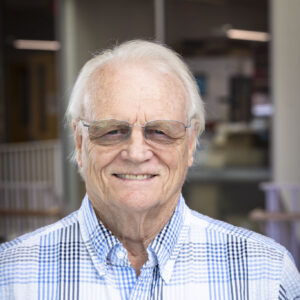 The proper functioning of any cell depends on the regulated expression of its genes. In unicellular organisms, like bacteria and yeast, gene expression is dependent on the cellular environment. In multicellular organisms, like humans, each different cell type expresses the genes required for its specialized functions. One mechanism of gene regulation involves transcription factors, proteins that bind DNA and can either turn on or turn off the synthesis of mRNA for specific genes. The focus of most of my career has been the study of transcription factor specificity, how they recognize specific sequences to alter gene expression. This talk will cover some of the history of that work and some examples of current applications of the specificity models. Gene can also be regulated post-transcriptionally, by controlling translation, or splicing or degradation. I’ve been particularly interested in post-transcriptional autoregulation, where proteins directly control the level of their own expression, and some examples will be presented.
Biography
Gary Stormo is the Joseph Erlanger Professor Emeritus in the Department of Genetics at the Washington University School of Medicine. He earned a bachelor’s degree at Caltech and a Ph.D. in Molecular, Cellular and Developmental Biology in 1981 from the University of Colorado in Boulder under the mentorship of Larry Gold. He remained in the Gold lab for a postdoc and then joined the faculty in MCDB. His research has focused on the regulation of gene expression using a combination of experimental and computational methods. He is a pioneer in the development and application of computer programs for analyzing DNA sequences to infer functions. In 1999 he moved to Washington University School of Medicine where he played a pivotal role in the creation of the graduate program in Computational and Systems Biology, one of the earliest such programs in the country. He was a founding Editor-in-Chief of the journal Bioinformatics and is an elected Fellow of the American Medical Informatics Association, the American Association for the Advancement of Science and International Society for Computational Biology. He is the recipient of the Carl and Gerty Cori Faculty Achievement Award.
Abstract
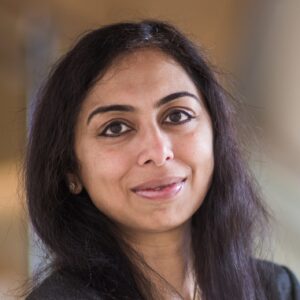 Currently, the largest number of FDA approved drugs work by manipulating the activity of ion channels at the plasma membrane. But the plasma membrane comprises 2–3% of the total cellular membrane, the remaining 98% is present in organelles, and the latter harbor hundreds of transmembrane proteins that can potentially transport ions. Organelles perform specific biochemistries within their lumens. This biochemistry is enabled by a specialized ionic microenvironment that is likely sculpted by organelle
 Biography
Yamuna Krishnan obtained her Ph.D. from the Indian Institute of Science in Bangalore where she studied the self-assembly of lipids. Thereafter she worked with Shankar Balasubramanian at the University of Cambridge, as an 1851 Research Fellowship, studying four-stranded DNA structures called quadruplexes. In 2005, she started her independent group at the National Centre for Biological Sciences
(NCBS) in Bangalore, India, where she developed the prototype DNA nanodevice to measure ions in organelles. In 2014, she was parachuted into the University of Chicago at the Department of Chemistry, where her lab fully developed the technology, revealing new insights into how cells functioned with every new ion they imaged in cells. Her lab’s work has been recognised with the Bhatnagar award for Chemical Sciences, the Infosys Prize for Physical Sciences, the Sun Pharma Award for Basic Medical Science, the Ono Pharma Breakthrough Science and the NIH Director’s Pioneer Award.
Abstract
Abstract coming soon!
Abstract
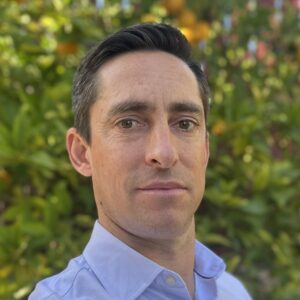 Illumina’s mission to unlock the power of the human genome has led to the development of genome sequencers that have transformed clinical diagnostics and biomedical research. Illumina is building on that vision by extending the use of their sequencing instruments beyond traditional genomics with a portfolio of multiomics products spanning epigenetics, transcriptomics, and proteomics. These end-to-end multiomics products will enable researchers and clinicians to integrate diverse biological data streams, offering unprecedented insights into disease mechanisms and paving the way for more precise diagnostics and targeted therapeutic strategies.
Biography
Mike Mehan leads the Multiomics Bioinformatics group at Illumina, driving innovations in epigenomics, transcriptomics, and proteomics. Illumina is a global leader in next-generation sequencing and enables researchers and clinicians to gain deeper insights from genomics data. Mike contributes to Illumina’s mission of transforming human health by working with his team to develop algorithms and software for Illumina’s portfolio of multiomics products. This new multiomics direction in sequencing combines diverse biological data to deliver a complete view of complex systems, unlocking new potential in disease diagnosis, customized therapies, and personalized medicine.
Abstract
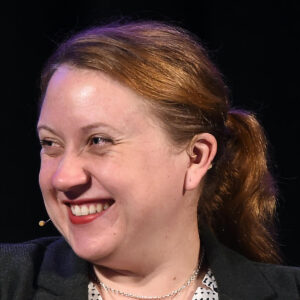 Public discourse has been dominated by sweeping proclamations about AI's transformative benefits, yet has confused the many different things that the term "AI" refers to. While attention has been focused on flashy generated videos and chatbots, there has been quiet, steady progress on a different kind of AI: The AI that can detect tumors, flag cardiac arrhythmias, monitor vaccine spoilage, and optimize medicine storage. This type of AI -- predictive, rather than generative -- enables faster, predictable, more accurate care throughout the world.
Biography
Dr. Margaret Mitchell is a computer scientist and Chief Ethics Scientist at Hugging Face, with over two decades of research at the intersection of artificial intelligence, ethics, and clinical technology. She holds a Ph.D. in Computer Science from the University of Aberdeen and a Master’s in Computational Linguistics from the University of Washington.
Her clinical and health AI work spans assistive technology and medical language processing. From 2005 to 2012, she worked at Oregon Health & Science University, applying natural language processing to detect neurological disorders and developing augmentative communication tools for non-verbal individuals. In 2014, she co-founded the annual Computational Linguistics and Clinical Psychology workshops and spearheaded projects to assist clinicians in mental health diagnoses.
She later led development of Seeing AI at Microsoft, a pioneering computer vision application that describes the visual world for blind and low-vision users, recognised with an award from the American Foundation for the Blind.
Dr. Mitchell has published over 100 papers on natural language generation, computer vision, assistive technology, and AI ethics, and holds multiple patents in AI development. She is widely known for pioneering Model Cards, a now widely-adopted framework for transparent AI reporting, and for her work mitigating unwanted AI biases.
She previously founded and co-led Google’s Ethical AI group and has been recognised by TIME as one of the most influential people in the world.
Abstract
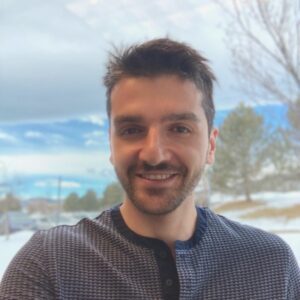 Modern frontier LLMs are descendants of a single model architecture: the Transformer, first published in 2017. Transformers are data hungry. A state of the art LLM today is trained on text that would take an average reader on the order of 100,000 years to read. Internet data, digitized books, and more recently, expert annotation marketplaces have enabled this scale of training data. But in many fields, including the life sciences, data is scarce. Scarcer still is interventional data, from which models learn causation more readily. In a world racing to scale the same architecture with more compute and data, what worked when scale was not an option? And what role did model architecture play in the answer?
Biography
Nima is co-founder and CEO at durable.ai, a startup developing an AI agent to automate the full software development lifecycle for non-technical enterprise users, from problem statement to production, maintenance, and modification. Before Durable, he was co-founder and CTO of Canvas Technology, a Boulder CO based startup developing vision-based autonomous mobile robots for manufacturing and logistics, acquired by Amazon. Post-acquisition, Nima was a venture partner at Xplorer Capital, helping the team source and assess early-stage startup deals in deep tech, AI, and sustainability. He holds a Ph.D. from the University of Colorado Boulder, where his research focus was visual perception and control for agile autonomous vehicles.
Abstract
Abstract coming soon!
Abstract
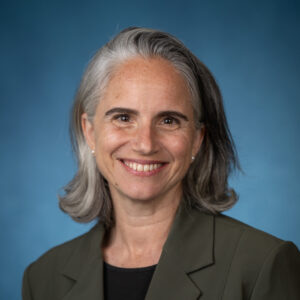 AI is fundamentally changing healthcare delivery, yet we hear little about the patient experience amidst the transformation or examine how the promise of AI meets patient expectations. This presentation will describe patient expectations and experiences with Health AI, focusing on the specific case of Ambient Scribe technology. Integrating quantitative data from patient surveys with qualitative insights from physician interviews, we will explore how AI tools influence communication dynamics, perceived trust, and care quality. The findings will be considered in a broader framework for risk assessment and ethical and equitable systemic change.
Biography
Jody Platt, Ph.D., M.P.H. is an Associate Professor in the Department of Learning Health Sciences at the University of Michigan, where she examines how data and information technology can be used responsibly to improve health while sustaining public trust. Trained in medical sociology and health policy, Dr. Platt studies the ethical, social, and policy questions that arise as health systems become more data-driven and powered by artificial intelligence. Her work focuses on how patients, communities, and healthcare organizations think about and experience data use in health and medicine, with the aim of informing real-world decision-making. From 2021 to 2024, Dr. Platt served as the inaugural Senior Scholar in Residence with AcademyHealth and the ABIM Foundation. Dr. Platt received her Ph.D. and M.P.H. from the University of Michigan School of Public Health.
Abstract
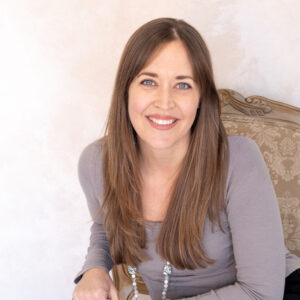 Breakthrough therapies dominate conversations about cancer medicine. Progress is often measured in trials, innovation, and outcomes. For families living inside illness, however, the story looks much different. Treatment unfolds across hospital hallways, kitchen tables, and long stretches of uncertainty that no protocol prepares you for.
Biography
Betsy Larrabee is a writer, speaker, and patient advocate whose work explores pediatric cancer, emerging cell and gene therapies, and the lived experience of families navigating complex medical systems.
After her son’s diagnosis with acute lymphoblastic leukemia at age six, and a relapse two years later, he participated in two CAR-T clinical trials at the Children’s Hospital of Philadelphia. What began as a child’s illness became a defining structure of family life, shaped by years of travel between Colorado and Philadelphia for treatment and trial care. In pediatric cancer, the illness belongs to one child, but the experience belongs to the whole family.
Writing at the intersection of gratitude and lament, Betsy shares the real story of navigating pediatric cancer, where the horrors persist but so does hope. On this side of survival, she is committed to bringing the lived experience of pediatric cancer families into conversations shaping the future of cell and gene therapy, advocating for patient-centered trial design and a more democratized model of care.
Today, Betsy writes and connects with parents navigating pediatric cancer while also speaking with researchers, clinicians, and industry leaders across the cell and gene therapy field. Her work centers on what scientific progress requires from the families asked to carry it, and how the future of innovation depends on designing systems worthy of patients’ trust.