
What is Interesting about Circadian Rhythms: Biochemistry, Neuroscience and Human Biology
The last 40 years has seen a sea change in the field of circadian rhythms. This 24- hour timing system (circadian = circa dia = about a day) has gone from a mystical, barely credible phenomenon to a real scientific enterprise. The contemporary molecular era was preceded by a foundational genetic study in Drosophila (fruit flies) published in 1971 by Konopka and Benzer; this organism has been a pioneering genetic system for more than 100 years. My colleagues and I then discovered in the 80s and 90s the mechanism that underlies circadian timing in flies, and it turned out that these genes and mechanisms are conserved in all animals. To our surprise, this circadian system governs a large fraction of all gene expression, once again extending from fruit flies to humans, which explains why so much animal physiology (biochemistry, metabolism, endocrinology, behavior, sleep, etc.) is under temporal control. Yet there are interesting features of the system that remain unexplained. One is its striking temperature-insensitivity, which I will explain. This is an unusual and challenging biochemical problem. Another is the special role that the brain and neuroscience plays in circadian timing. There are very specific brain regions that have high concentrations of the circadian machinery and are critical to regulate sleep and wake behavior as well as other functions. There are only about 200 of these clock neurons in the adult fly brain; it has about 70,000 total neurons. Although a major interest of my lab, these clock neurons present a challenge; many molecular methods of interest are biochemical and therefore difficult to apply to such small numbers of neurons. Lastly, the broad reach of circadian biology indicates that it will continue to be important to many aspects of human well-being and will become increasingly relevant as more knowledge accumulates. I will hopefully have time to discuss some of these contemporary and future applications to medicine.
Presented by:
Michael Rosbash, Ph.D.
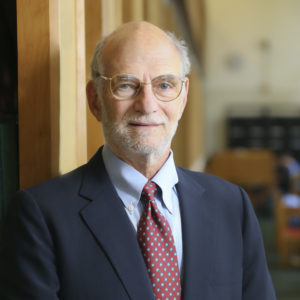
Professor of Biology and the Peter Gruber Professor of Neuroscience
View SlidesContact Info
Gold Lab
University of Colorado Boulder
347 UCB Boulder, CO 80309Email: info@goldlabfoundation.org